This essay first ran on The Brand Architect, our Substack, on February 11, 2026. It is republished here unchanged. Since then, the “framework” it describes has a second product: Kitana Lite, our brand review agent.
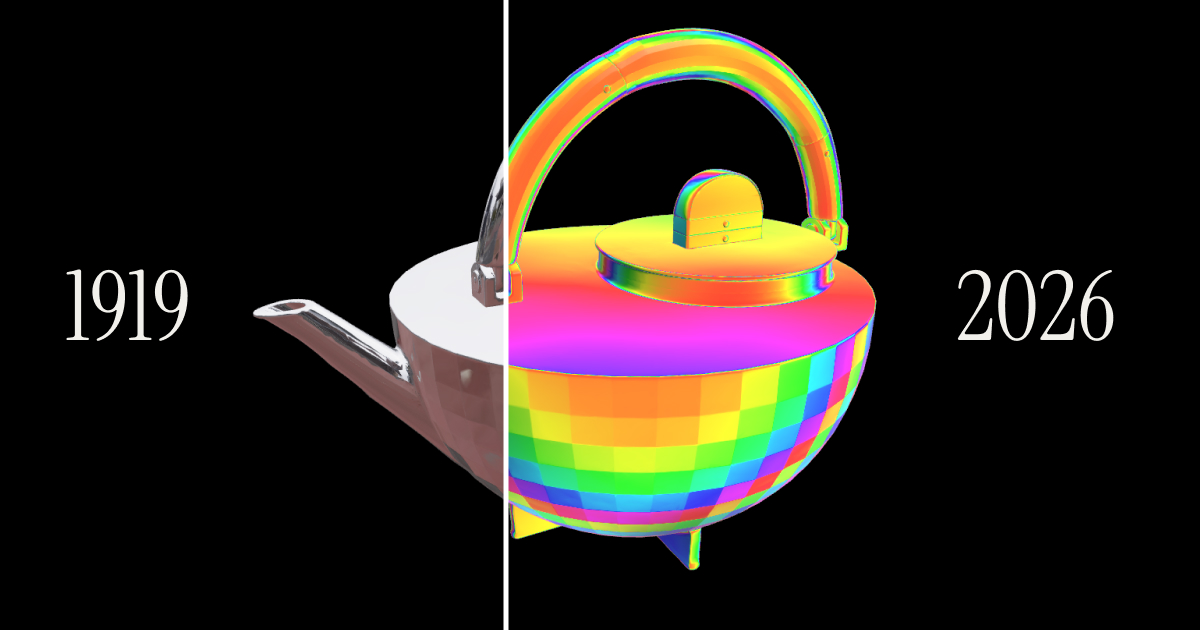
In 1919, Walter Gropius opened the Bauhaus in Weimar with a simple thesis: industrialization had changed how things were made, and design needed a new framework to keep up. Factories could mass-produce furniture, textiles, architecture. But without intention, without a philosophy for how to design within these new capabilities, you just got ugly mass production. The Bauhaus didn’t reject industry. It built the principles for designing within it.
AI is doing the same thing to content and design right now. The production capacity is exploding. Anyone can generate images, write copy, produce layouts at a speed that would have been unimaginable five years ago. But the frameworks haven’t caught up. Most of what AI produces looks like what it is: undirected output with no point of view.
Every major shift in technology creates this gap. New capabilities arrive. The tools exist. But the philosophy for how to create meaning within the constraints of that new technology, that takes longer. And it’s usually the builders and designers who figure it out, by working with the material until they understand what it’s actually good for.
That’s what we’re doing at RepliHaus. We’re experimenting with a new philosophy for creating meaning and storytelling with AI. Not AI as a replacement for design thinking, but AI as a new material that designers can work with, shape, and direct.
The handoff nobody built for
I’ve spent my career in design. Branding, typography, UI, 3D, product, the whole spectrum. I’ve been the designer people come to when they need something that looks right and feels intentional and I’ve been the designer who gets 14 Slack messages on a Monday morning asking for “quick” ad variations that are due by Wednesday.
If you run a design team, you know this feeling. If you’re on a marketing team, you know the other side of it: the waiting, the workarounds, the “just use the template in Figma” ask that assumes your marketer knows how to navigate design software without breaking something.
Here’s what’s strange: the design tool industry has spent years perfecting the handoff between design and engineering. Figma to code. Design tokens. Component libraries that sync with production. That pipeline is well-built. But the handoff between design and marketing? Almost completely ignored. Designers create assets. Marketers need to use and adapt them. And the tooling between those two groups is basically “send a Figma link and hope for the best.”
Template libraries exist. Designers still end up as bottlenecks because none of these tools solve the trust problem. Designers don’t hand over the keys because they’ve seen what happens when they do. One wrong font, one stretched logo, one “I thought that color looked close enough” and months of careful brand work unravels over a few rogue elements.
And now there’s a newer version of this problem. Most companies are already using AI for creative work, whether they admit it or not. Someone on the marketing team is running prompts through ChatGPT. Someone else is generating images with Midjourney. It’s happening in the shadows, uncontrolled, and completely off-brand. The volume of content you can produce just went up by an order of magnitude. The governance hasn’t caught up.
This is exactly the Bauhaus problem, a century later. The production capacity outpaced the design thinking.
What a framework for this era looks like
The handoff between design and marketing has to go both ways.
Design needs to give marketing intelligent, simple templates that non-designers can actually use without breaking anything. Not templates inside complex design software that require training to navigate. Templates reduced down to a form: fill in the headline, pick the image, export. The design rules are built in. The margin for error is gone.
And marketing needs to give design something back: data. Performance data that tells designers which templates work, which don’t, and why, so they can improve them. Right now designers set rules and never hear what happened. Marketers request assets and never explain what performed. Both sides operate in the dark. The framework has to connect them.
That’s the philosophy. AI makes both sides of this possible for the first time. Simple, intelligent templates that enforce brand rules without requiring design skills. Performance feedback that flows back to the people making creative decisions. A loop instead of a one-way handoff.
Where RepliHaus starts
RepliKit is our first product. A Figma plugin where a designer builds a template, tags the editable parts, everything else is locked by default, and a marketer fills in content through a clean form without ever touching the design software underneath. The designer set the rules once. The system enforces them on every export. The marketer gets their 20 ad variations by Friday. No design review needed, because the template made it impossible to go off-brand.
It’s in paid alpha. It works. But it’s the first expression of the philosophy, not the whole thing.
We’re building toward templates that learn from how they’re used. AI that understands your specific brand because it trained on your designers’ actual work. A platform that connects the tools and feeds data back through the system so both sides keep getting better.
I’ll write more about the specifics of what we’re building soon. For now, the point is this:
Why this matters now
The volume of content that brands need to produce has gone up dramatically in the last few years. More platforms, more formats, more markets, more personalization. The teams creating this content haven’t grown at the same rate. And AI is accelerating it. The volume of possible content is about to explode while the need for brand governance gets even more urgent.
The Bauhaus responded to industrialization by saying: we don’t reject the factory, we give it a design philosophy. The factory becomes a tool for good design, not a threat to it.
That’s our bet. AI is the new material. The companies that figure out how to design with it, within its constraints, using its strengths, directing it with real intention, those are the ones that will produce work that actually means something. Everyone else will drown in generic output.
We’re building the framework for the first kind.
If this resonates
If you’re a design leader tired of being the bottleneck, or a marketing leader tired of waiting in queue, I’d like to hear from you. Not a sales pitch, a conversation about how your team works and where it breaks down.
We’re at replikit.ai, and I’m at hey@seun.design. Always happy to talk.
First published on replikit.substack.com. Topics: design, AI, brand systems.